
FOR IMMEDIATE RELEASE
PRESS STATEMENT
A rapid needs assessment conducted by Citizens Health Initiative Nigeria (CHIN) among displaced residents of the Makoko waterfront has uncovered a deepening health and protection crisis that demands urgent government intervention. The findings paint a distressing picture of a community abandoned to disease, despair, and financial barriers that make survival a daily struggle.
The assessment, carried out among households directly affected by the recent demolitions, reveals that families are now living in makeshift driftwood shacks, sleeping in overcrowded rooms, or taking refuge in boats. A small number have been pushed into street homelessness.
Key Findings
Healthcare Access Has Collapsed The overwhelming majority of residents interviewed said they could not afford to visit a healthcare facility. Clinics are nearby but financially out of reach. For the displaced fishermen, fish processors, and petty traders who lost their livelihoods overnight, consultation fees and drug costs have become impossible burdens. Preventable and treatable conditions, malaria, respiratory infections, and diarrheal diseases, are being managed at home, if at all.
Community Mental Health is in Crisis An alarming number of respondents described their emotional state as one of hopelessness. The trauma of losing homes, belongings, and livelihoods has not been met with any form of psychosocial support. People spoke of feeling forgotten, invisible, and abandoned by the systems meant to protect them.
Sanitation Infrastructure Has Been Destroyed The demolition removed existing toilet facilities without providing replacements. The result is a sanitation emergency. Residents are being forced to rely on the lagoon itself for waste disposal, contaminating the same water used for washing, bathing, and fishing. This presents an imminent risk of waterborne disease outbreaks, including cholera and typhoid.
Vulnerable Individuals Are Falling Through the Cracks Among those identified in the assessment are elderly residents living with chronic conditions, including a stroke survivor who has lost access to regular care. Others include people with physical disabilities navigating life on boats, and homeless individuals with no shelter at all.
Call to Action
In light of these findings, CHIN calls on the Lagos State Government, the Ministry of Health, the Lagos State Emergency Management Agency, and all relevant authorities to act without delay.
We respectfully demand the following urgent interventions:
Immediate Free Healthcare Access: A 90-day waiver of all user fees at Iwaya Primary Health Centre and Mainland Hospital for displaced Makoko residents. No one should die because they cannot afford a consultation.
Emergency Sanitation Provision: The immediate deployment of mobile bio-digester toilets on barges to the affected waterfront clusters. The current open defecation situation is a public health emergency that endangers not only Makoko but the wider Lagos environment.
Psychosocial First Aid and Mental Health Support: Deployment of trained social workers and community health extension workers to provide psychological first aid to a population in acute distress.
Shelter and Non-Food Items: Provision of tarpaulins, treated mosquito nets, blankets, and basic shelter materials to families living in unsafe, exposed conditions.
Protection for the Most Vulnerable: Establishment of a case management system to ensure the elderly, people with disabilities, chronically ill patients, and homeless individuals are identified, registered, and provided with targeted support.
Meaningful Community Engagement: We urge the authorities to engage directly with community leaders and residents in planning any further actions. Top-down interventions without local input have repeatedly failed. The people of Makoko must be partners in their own recovery, not spectators.
Voice from the Community
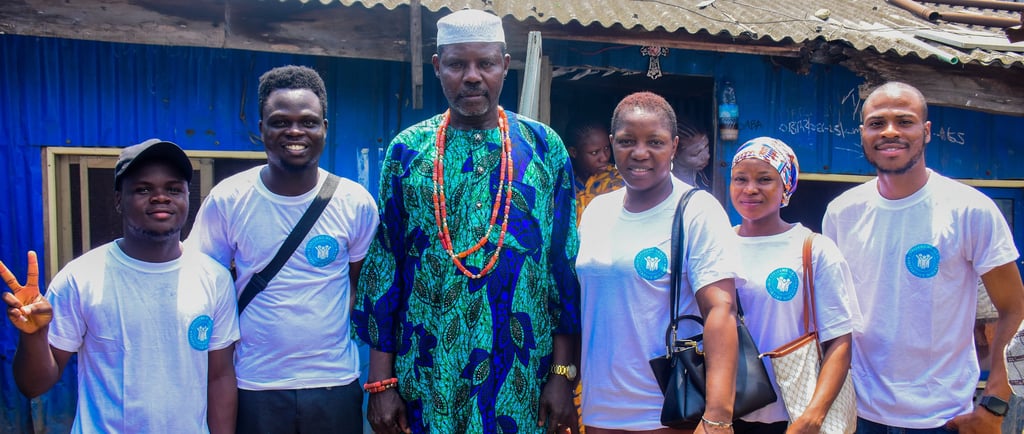
"Makoko has survived for generations because our people are strong and we look after one another. But what happened here was not just demolition — it was the destruction of everything families had built over a lifetime. The old, the sick, the children — nobody came for them. We are not asking for pity. We are asking for what every Nigerian deserves: to be seen, to be safe, and to receive care when they are in need. I call on the government of Lagos State to come to Makoko — not with cameras, but with action." — Baale Chief Orioye Japhter Ogungbure, Apollo Community Leader, Makoko
Statement from Citizens Health Initiative Nigeria
"What we witnessed in Makoko is not just a housing crisis. It is a health emergency, a protection failure, and a moral challenge to the conscience of Lagos State. The people of Makoko are Nigerians. They are Lagosians. They have a right to health, dignity, and safety. We refuse to accept that a community can be demolished and then forgotten. We stand with Makoko, and we demand immediate action." — Darlene Godfrey-Oduh, Director of Program & Outreach, Citizens Health Initiative Nigeria
Background
Makoko is a historic waterfront community on the Lagos Lagoon, home to generations of fishermen, traders, and artisans. The recent demolitions carried out by state authorities have displaced hundreds of households, destroyed livelihoods, and dismantled community infrastructure without adequate resettlement or transitional support. The assessment that informs this statement was conducted on the ground in the weeks following the demolition, capturing the lived experiences and urgent needs of 61 households across the affected area.
Media Contact
Citizens Health Initiative Nigeria (CHIN)