Delta State Records Eight Lassa Fever Cases, One Death - What You Need to Know
HEALTH ALERT
2/3/2020
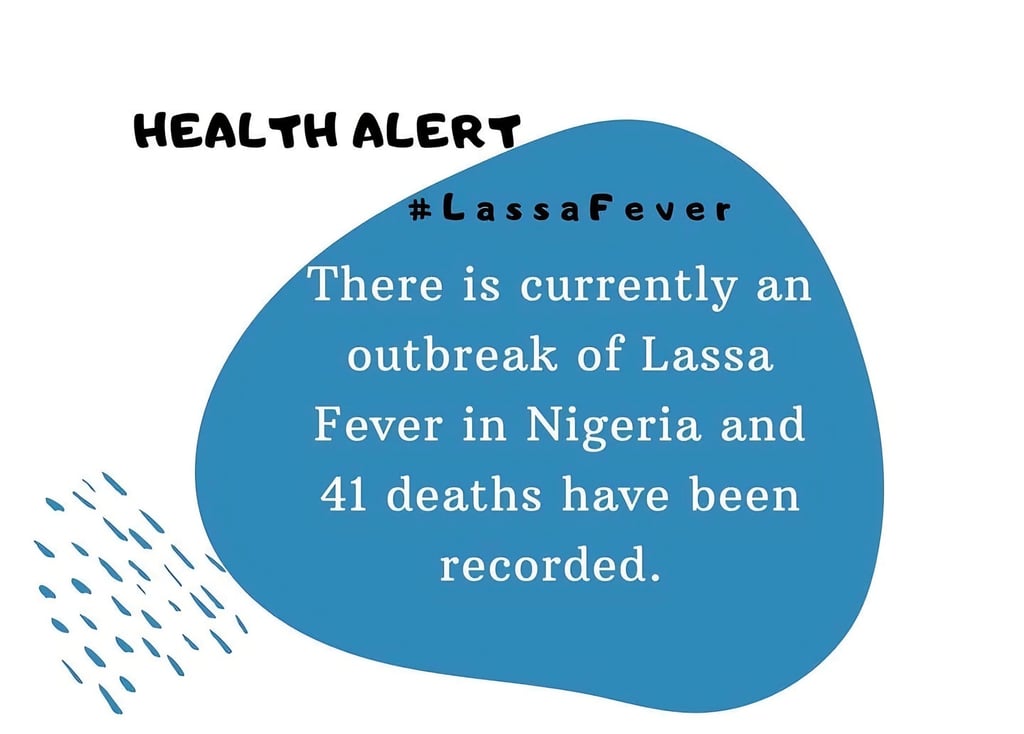
The Delta State government has confirmed eight cases of Lassa fever, with one recorded death. At least 120 persons are currently under surveillance as health authorities work to contain the outbreak.
The development is a sobering reminder that even as Nigeria's attention has been absorbed by other health emergencies, Lassa fever remains an active and persistent threat to communities across the country.
What is Lassa Fever?
Lassa fever is an acute viral hemorrhagic illness caused by the Lassa virus, carried primarily by the multimammate rat — one of the most common rodents in West Africa. The disease spreads to humans through contact with food or household items contaminated with the urine or faeces of infected rats. Person-to-person transmission is also possible, particularly in healthcare settings where infection control measures are inadequate.
Nigeria records Lassa fever cases every year, with the burden falling heaviest on rural and peri-urban communities where rodent exposure is highest and healthcare access is most limited.
Who is at Risk?
Anyone living in or travelling to areas where the multimammate rat is common is potentially at risk. However, communities with poor food storage practices, open food markets, and limited sanitation infrastructure face a significantly higher risk of exposure.
How to Protect Yourself and Your Family
The most effective protection against Lassa fever starts at home. CHIN urges all Nigerians to take the following steps:
Store food properly: keep all food items in sealed, rodent-proof containers. Never leave food uncovered or on the floor overnight.
Keep your home clean: clear bushes, seal holes in walls, and remove anything that could serve as shelter for rodents around your home.
Dispose of waste properly: open waste attracts rats. Use covered bins and dispose of household waste regularly.
Avoid contact with rodents: do not handle rats, dead or alive, with bare hands.
Seek care early: if you develop fever, headache, weakness, or any bleeding symptoms, visit a health facility immediately and inform the health worker of any possible rodent exposure.
When to See a Doctor
Early symptoms of Lassa fever can be difficult to distinguish from malaria or typhoid. Do not self-medicate. If you or anyone in your household develops a sudden fever, particularly alongside weakness, chest pain, sore throat, or unexplained bleeding, go to a health facility without delay. Early treatment significantly improves survival.
CHIN's Message
At Citizens Health Initiative Nigeria, we believe that outbreaks like this are preventable. The single most powerful tool communities have against Lassa fever is information, knowing the risk, knowing the signs, and knowing what to do.
We urge all Nigerians, particularly those in Delta State and surrounding areas, to take rodent control seriously, protect their food, and encourage their neighbors to do the same. We also call on state and federal health authorities to strengthen surveillance, ensure adequate supplies of ribavirin for treatment, and invest in community-level health education.
No Nigerian should die from a disease we know how to prevent.
#LassaFever #HealthForNigerians #CitizensHealth #COVID19Nigeria